On the Global Alliance against Hunger and Poverty’s second anniversary, ICGEB calls for coordinated support to expand Ethiopian-led innovation and bring its benefits to more communities.
Trieste, Italy, 16 November 2026 – Faster food processing, reduced losses and more than 4,000 direct jobs: ICGEB’s partnership with Ethiopian researchers and communities demonstrates how sustained support for locally led science can advance food security and rural livelihoods.
Marking the second anniversary of the Global Alliance against Hunger and Poverty, the ICGEB is highlighting these achievements through The Race to 2030 campaign. Its contribution supports the Alliance’s objective of sustaining political momentum for coordinated action towards Sustainable Development Goal 1, No Poverty, and Goal 2, Zero Hunger.
The next challenge is to expand access. Building on results in Ethiopia, the proposed EnsetRise – Enset for Sustainable Resilience and Job Creation in Ethiopia and Kenya initiative sets out a three-year pathway to strengthen planting-material supply, community processing, local enterprise and regional technology transfer.
From 3 pilot sites to 44 community processing centres
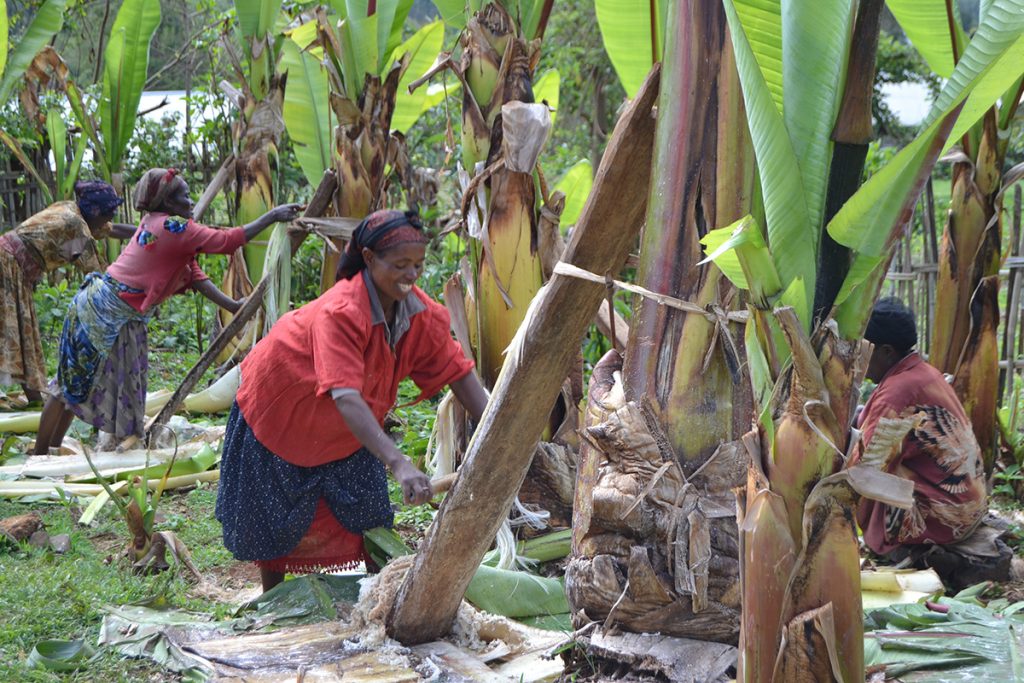
Enset, an indigenous Ethiopian crop and a dietary staple for more than 20 million people, plays a vital role in household food security. However, labour-intensive processing, lengthy fermentation periods and significant post-harvest losses have long hindered its potential to contribute more fully to food security.
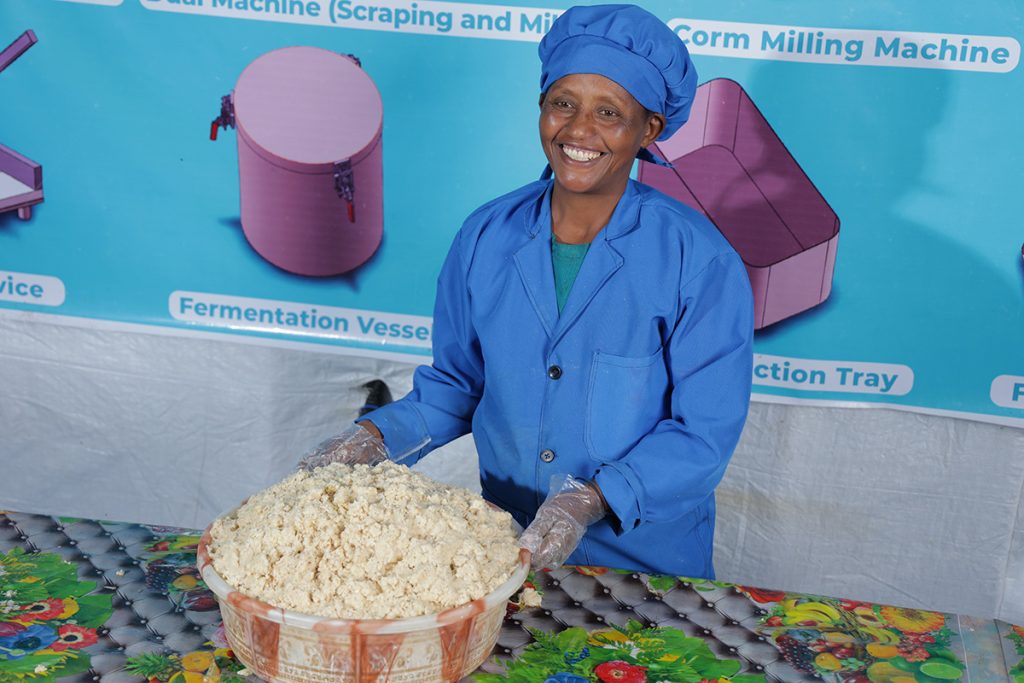
Research led by Dr Addisu Fekadu Andeta at Arba Minch University, supported through ICGEB’s Collaborative Research Programme and subsequent cooperation, has helped address these barriers. Standardised microbial starter cultures, improved fermentation vessels and mechanised processing combine scientific expertise with local knowledge to make food production faster, safer and more reliable.
Between 2022 and early 2026:
The processing network expanded from 3 pilot sites to 44 operational community centres across four Ethiopian regions.
Fermentation time fell from two to four months to seven days.
Post-harvest losses declined from up to 45 per cent to below 2 per cent.
The wider initiative generated more than 4,000 direct jobs, indirectly benefiting over 32,000 rural residents.
These achievements predate ICGEB’s entry into the Global Alliance in June 2026 and provide a foundation for its contribution to the Alliance’s shared goals.
Women’s enterprise at the centre of change
Women play a central role in traditional enset processing. Improving the technology can reduce demanding manual work while opening opportunities in food production, business management and higher-value products.
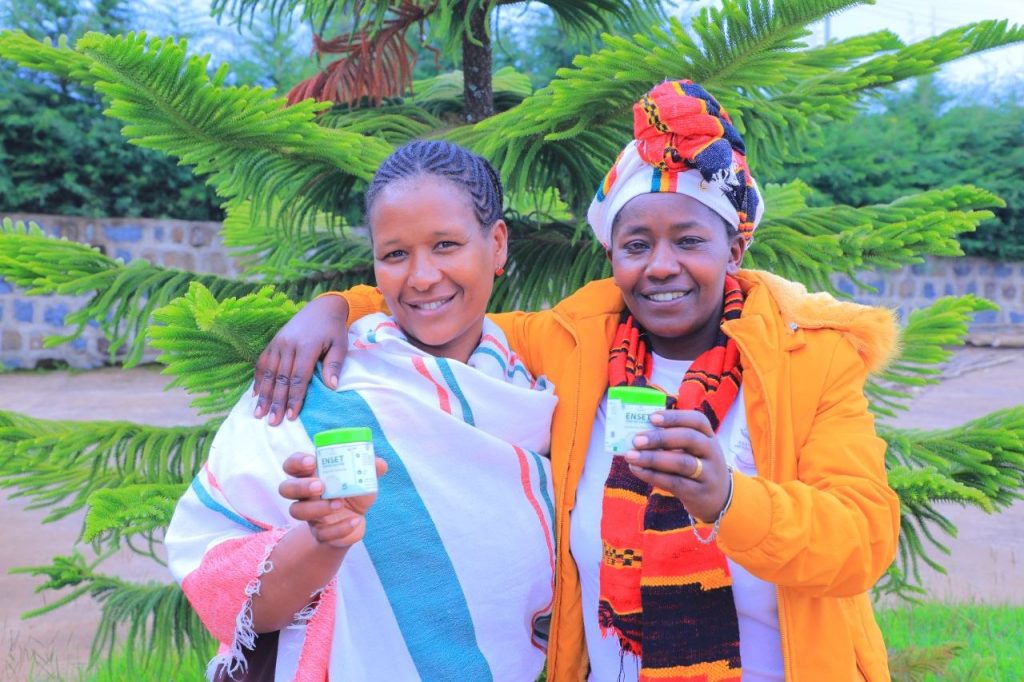
Lucy Enset, a women-led enterprise in Arba Minch, illustrates this transition. The company has generated 100 jobs and reached a production capacity of three tonnes per day. Enset fibres and other by-products also offer opportunities for handicrafts and additional income.
“Lucy Enset empowers women through employment, skills development, and income-generating opportunities, helping them become active contributors to the economy and build a more secure future for their families,” says Feven Teshome, Production Manager at Lucy Enset.
ICGEB supported the launch of Lucy Enset starter cultures in April 2025 through BioBoost, part of the B-INOC AFRICA initiative funded by the Italian Ministry of Foreign Affairs and International Cooperation under the Mattei Plan for Africa. Practical training for farmers and local agricultural stakeholders continued in 2026. The work received further recognition on 16 October 2026, when Dr Andeta received the FAO Award for Achievement as a co-winner for his innovations in enset processing.
EnsetRise: the race towards 2030
Growing demand has exposed further constraints: insufficient disease-free planting material, limited processing capacity, and gaps in industrial production and market access.
EnsetRise proposes an integrated response, aligned with Ethiopia’s National Enset Development Flagship Program for 2024-2030. It would connect seedling production and cultivation with community enterprises, industrial processing, women-led businesses, and pilot technology transfer to Kenya.
Under its full-scale scenario, the proposal sets targets for 2029 that include:
- Producing and distributing 18 million disease-free seedlings and expanding enset cultivation across 20,000 hectares.
- Training 75,000 farmers in Ethiopia and 5,000 in Kenya.
- Establishing 350 community processing centres, supported by 1,200 aggregation hubs.
- Developing 3 industrial food-processing facilities.
- Supporting 200 women-led cooperatives, with a target of 15,000 women trained and employed in fibre and by-product enterprises.
Coordinated action behind country priorities
For ICGEB, the partnership demonstrates the importance of connecting research funding, technical assistance and technology transfer with national priorities and community needs. Ethiopian institutions and enterprises lead local development, while international cooperation helps strengthen the skills and systems needed for wider adoption.
Through the Global Alliance, ICGEB is bringing this experience to the collective effort to accelerate progress against hunger and poverty. The priority now is to mobilise coordinated support so that successful innovations can reach more farmers, strengthen rural businesses and create lasting opportunities for women and young people.
With 2030 approaching, the enset partnership offers both evidence of progress and a practical agenda for acceleration: invest in local knowledge, strengthen national capacity and sustain cooperation from research through to delivery.