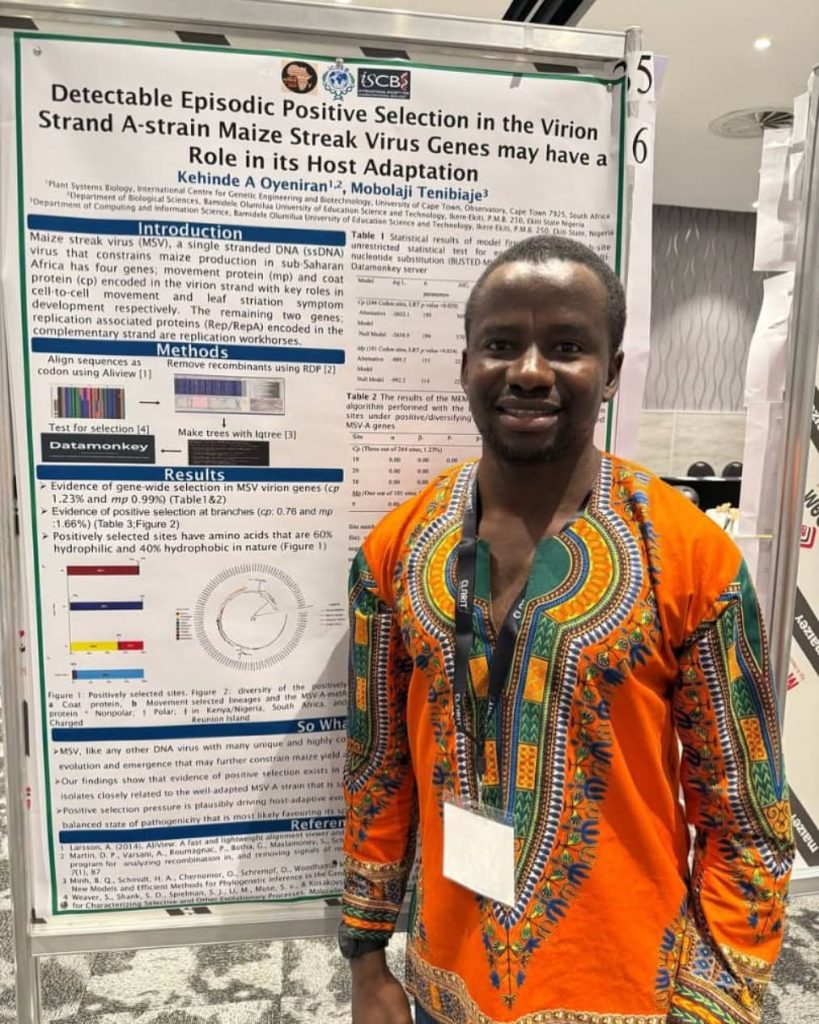
Dr. Kehinde Adewole Oyeniran, Plant Systems Biology Lab at ICGEB Cape Town, has collaborated on a major new global study examining the burden of tuberculosis (TB) and multidrug-resistant tuberculosis (MDR-TB)
The study, published in The Lancet Infectious Diseases as part of the Global Burden of Disease (GBD) 2023 Study, provides one of the most comprehensive assessments yet of how TB continues to affect human health across 204 countries and territories.
While tuberculosis may seem like a disease of the past, in reality it remains the world’s leading cause of death from a single infectious agent. The disease is caused by the bacterium Mycobacterium tuberculosis, which most often attacks the lungs but can also affect other parts of the body. Although TB is both preventable and treatable, millions of people continue to become infected every year. The challenge is even greater in regions where healthcare access is limited, where HIV infection is common, or where drug-resistant forms of TB have emerged.
This publication brings together researchers from around the world to answer a fundamental question:
How much illness and death is TB causing today, and is there capacity to eliminate it globally? To address this, the researchers analysed health information collected from a wide range of sources, including national disease surveillance systems, death records, verbal autopsies and other epidemiological datasets. They then used advanced statistical models to estimate TB incidence, prevalence, mortality, and overall health impact across different populations and age groups.
Particularly concerning is multidrug-resistant tuberculosis (MDR-TB). This occurs when TB bacteria evolve resistance to the most powerful first-line medications. MDR-TB is often harder, more expensive, and more time-consuming to treat. By studying its global distribution, researchers can help governments plan better healthcare responses and allocate resources more effectively.
The study also evaluates progress toward the World Health Organization’s End TB Strategy, which aims for dramatic reductions in both TB deaths and TB incidence between 2015 and 2035. By establishing a detailed picture of where the world stood in 2023, the research provides an evidence base for tracking future progress. It also comes at a critical time, as reductions in global health funding threaten many disease-control programmes worldwide.
Large-scale studies like the GBD project require expertise from hundreds of researchers working across disciplines, including epidemiology, public health, statistics, infectious diseases, and data science. The involvement of scientists such as Dr. Oyeniran demonstrates the increasingly global nature of modern biomedical research. Addressing diseases like TB requires perspectives from countries with different healthcare systems, disease burdens, and scientific strengths.
For ICGEB and its Alumni community, Dr. Oyeniran’s contribution to this landmark publication highlights the important role that internationally connected scientists play in tackling some of humanity’s most persistent health challenges.
Link to the published study: Global, regional, and national burden of tuberculosis and multidrug-resistant tuberculosis by HIV status, 1990-2023: a systematic analysis for the Global Burden of Disease Study 2023